AI could barely make a single module in a day. Now it has begun to take on work measured in scheduled tasks. Looking back, the way I work has changed about four times in two years, and my own place seems to have moved with it each time.
1. The age of suggestions — the early coding IDE
At first, AI coding was a simple suggestion function. As I typed, it showed the next few lines in gray, and I could accept them by pressing Tab. I still did the work; AI was a tool that made my hands a little faster.
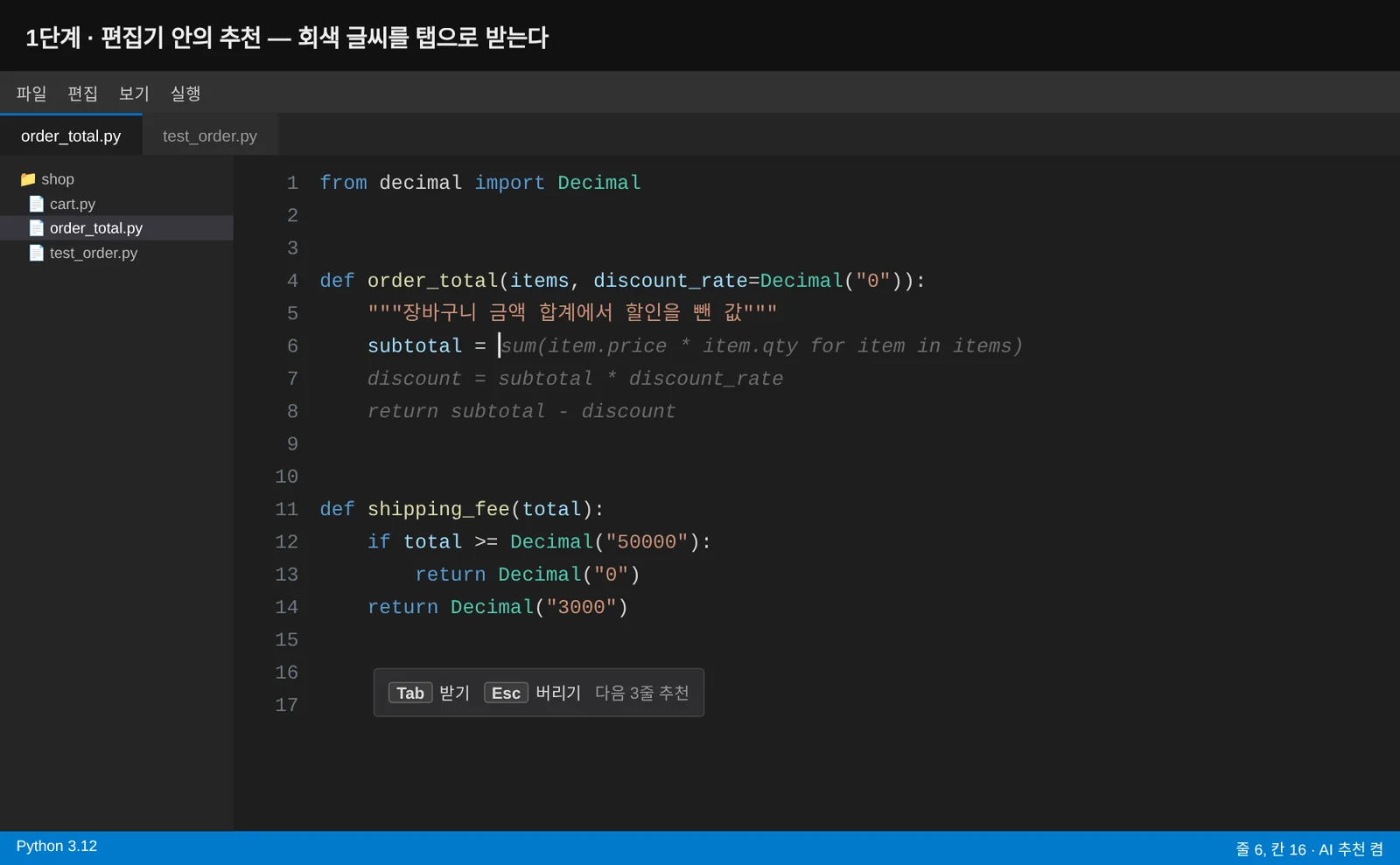 (Figure 1: The first stage. After I type a function name and the first line, the next three lines appear in gray, and I accept them with Tab.)
2. The age of the chat window — small features and debugging with good prompts
The second stage was making small features and asking AI to debug with good prompts. My work moved from the coding IDE's editor to the chat window beside it. Until around 2024, I think the people who did well were the ones who could write good prompts.
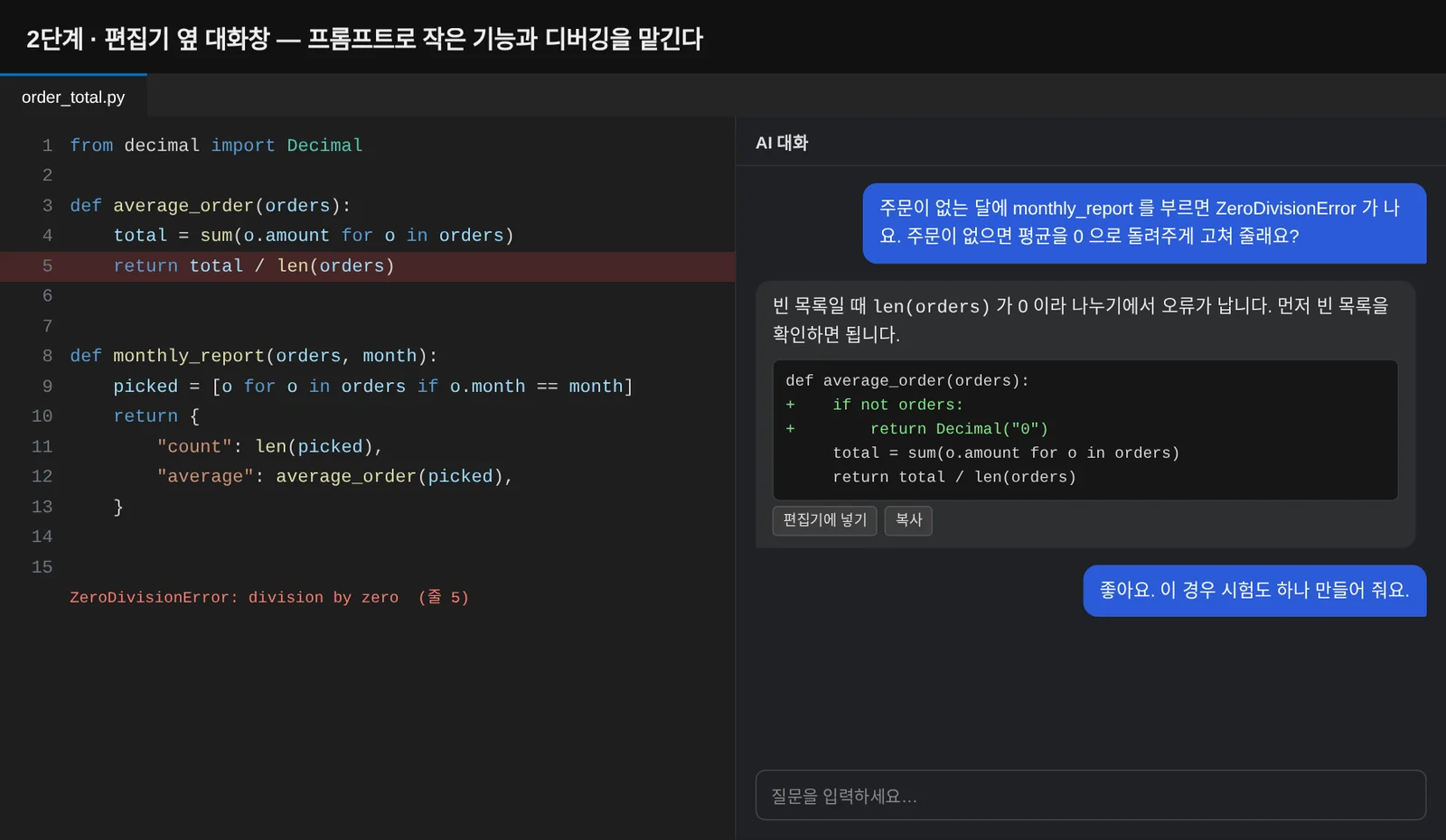 (Figure 2: The second stage. I explain an error in the chat window, AI shows me code to fix it, and I put that into the editor.)
The 2025 Stack Overflow developer survey captures the mood at the time. Of respondents, 84% were using or planning to use AI tools, and 51% of professional developers used them daily. Yet only about three in ten used agents at work, even counting daily, weekly and occasional use together. More people distrusted the accuracy of AI answers (46%) than trusted it (33%).
3. The age of the harness — defining the spec and keeping development on track
The third stage, starting this year, was about defining specifications and making sure development went properly. The harness was defined and its environment set up. My screen filled with dark terminals. I had several open because I was handling several issues at once. With the harness in place, agents could work from beginning to end, so I spent longer waiting.
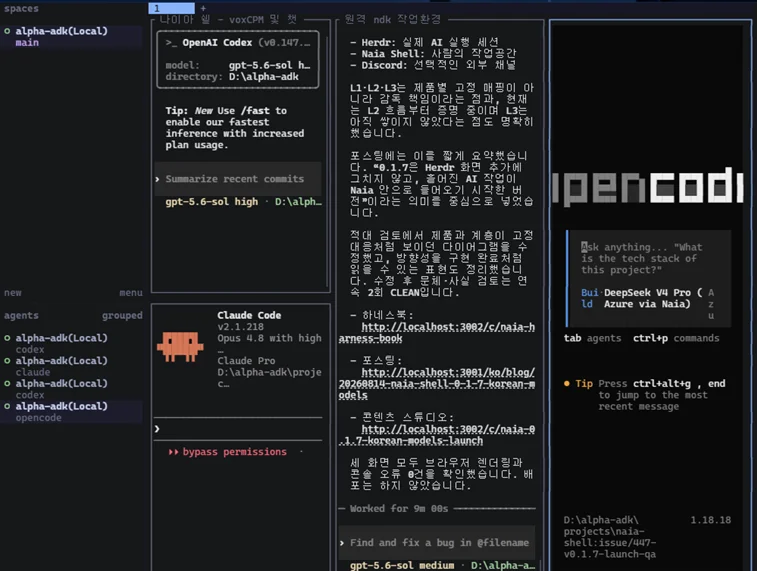 (Figure 3: My actual screen during the third stage. A list of agents is on the left, and in each window a different agent (Codex, Claude Code, OpenCode) handles its assigned issue. The center window shows a work report submitted by an agent.)
During this period, the length of work AI could complete on its own grew quickly. In January this year, AI evaluation organization METR reported that the length of a task AI can complete with a one-half chance, measured in human working time, had long doubled about every 7 months; after 2024, that interval shortened to about 89 days. Those figures describe AI going from struggling with a single module to taking on tasks lasting hours.
In February, OpenAI told a similar story under the name "harness engineering." Over five months, agents built a product of about 1 million lines without humans writing source code by hand, and engineers' work shifted from implementing code to designing the environment in which agents work.
I put a webtoon of this terminal-based coding in chapter 1 of my book "Harness Engineering." It is about how my 1999 self would not believe me if I visited and said that in the future we would code with GPUs and terminals. But while writing the second edition, I added a parenthetical thought beside it: this too may soon be coming to an end.
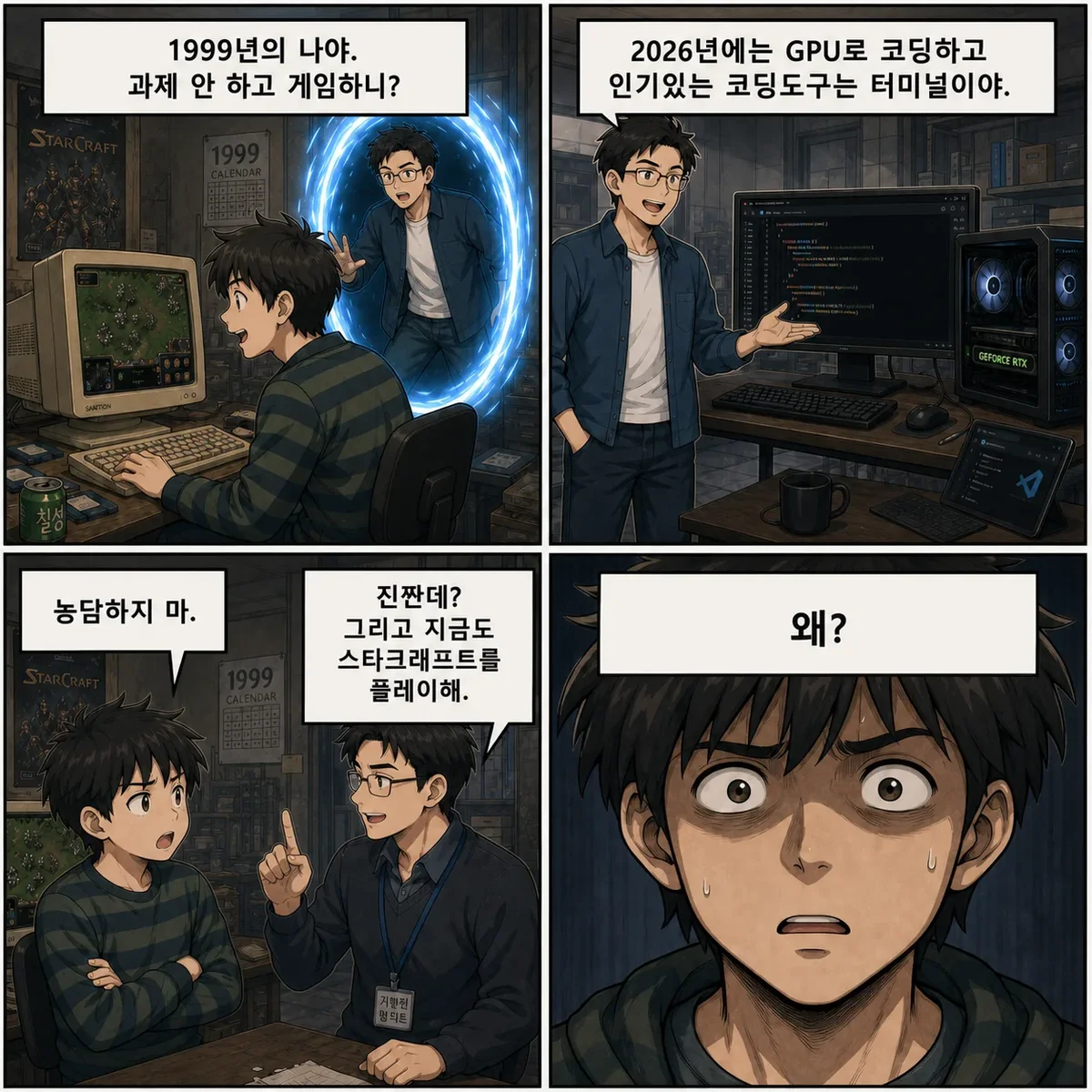 (Figure 4: A webtoon from chapter 1 of "Harness Engineering." My future self visits my 1999 self and says, "In 2026, we code with GPUs and the popular coding tool is the terminal," but my past self tells him not to joke.)
4. The age of the messenger — documents, reports and approval
Finally, since October, I have been managing schedules by looking at messages, design documents, reports and approvals. I started entering the terminal when something broke, and the work expanded from software development to everything the company does.
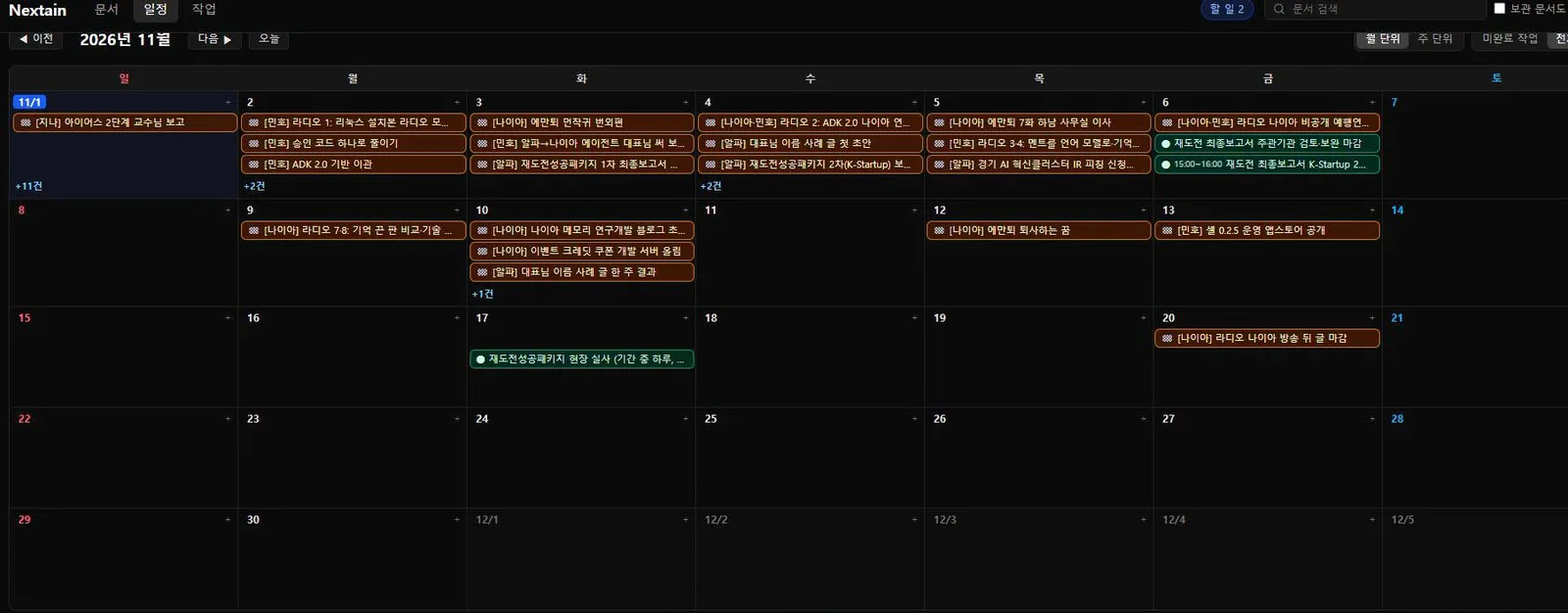 (Figure 5: A screen I look at these days. Tasks labeled with each AI colleague's name appear on the calendar.)
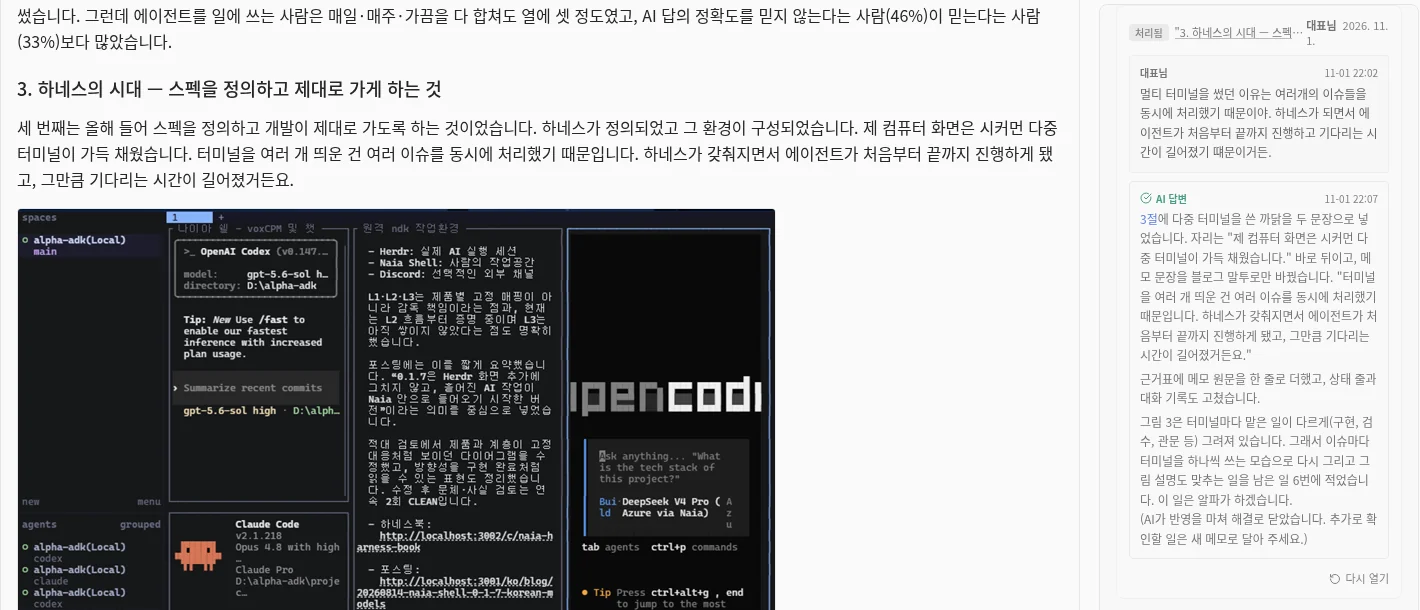 (Figure 6: Working in a document. When I leave a one-line note, an AI colleague revises the document with supporting evidence and replies beside the note with what changed.)
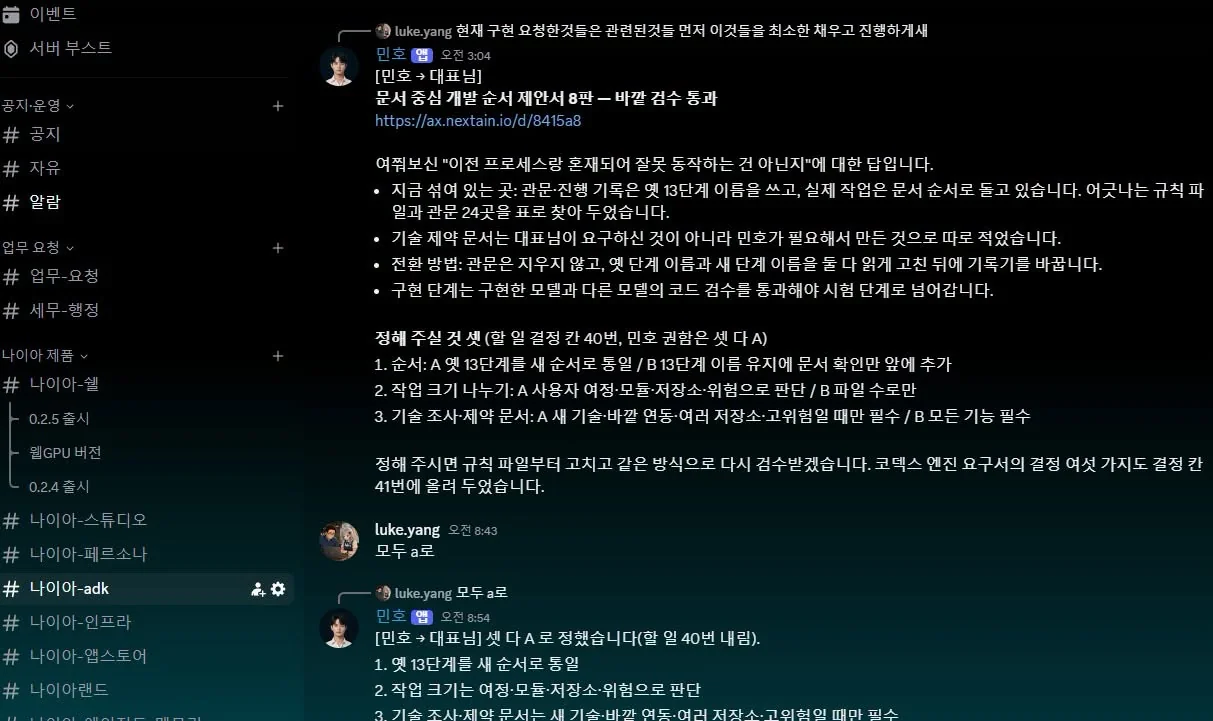 (Figure 7: Approval happens in the messenger. When Minho posts three decisions, I reply in one line, "all a.")
AI colleagues receive work through a messenger and leave the results in documents, which I review and approve. This flow now covers not just development but email, proposals, educational materials, webtoons and blogs. It shows up in the numbers, too.
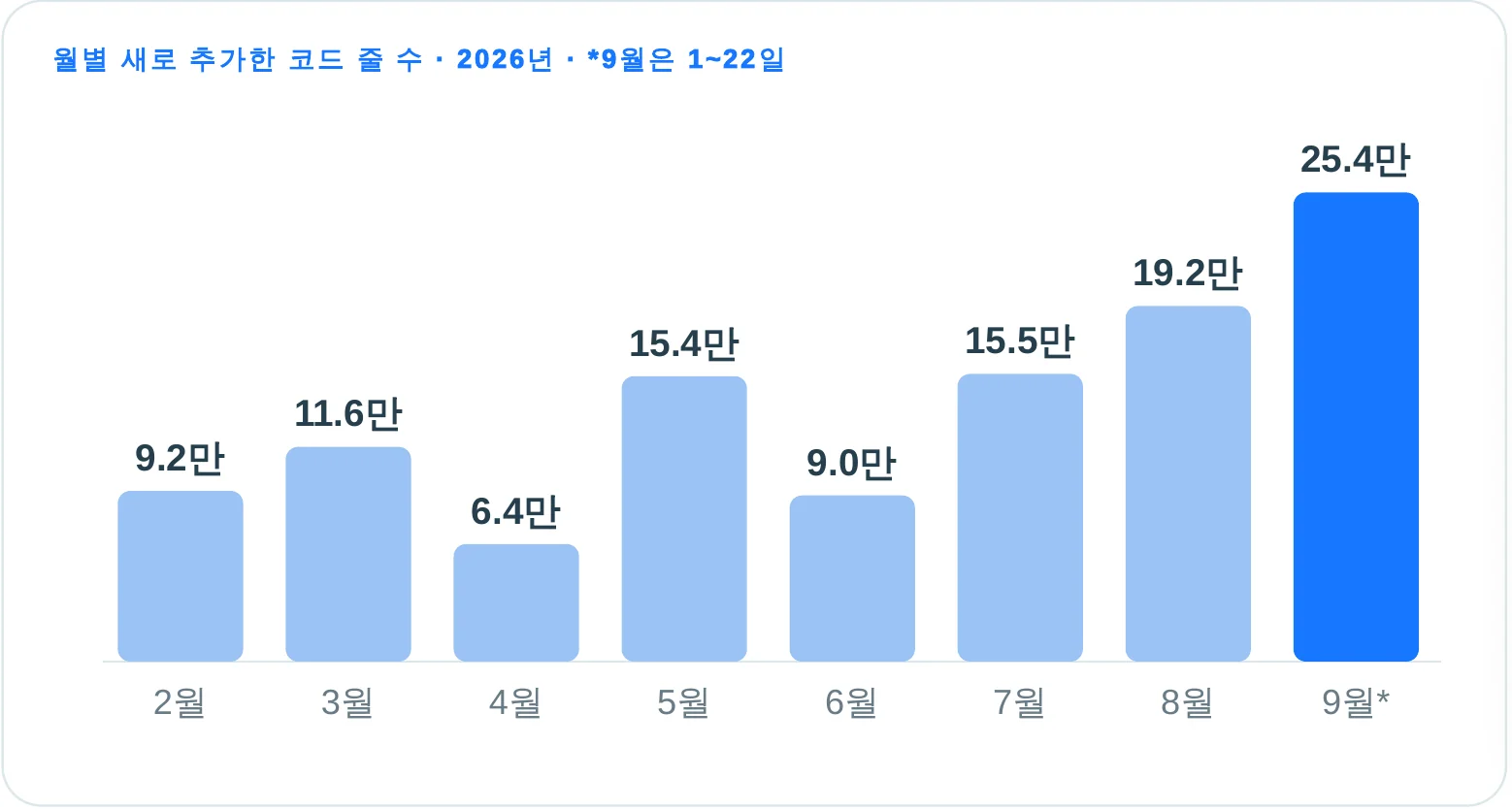 (Figure 8: A graph from Nextain's investor relations materials. New code added to product repositories per month rose from 92,000 lines in February to 254,000 lines in September. September covers the 1st through the 22nd.)
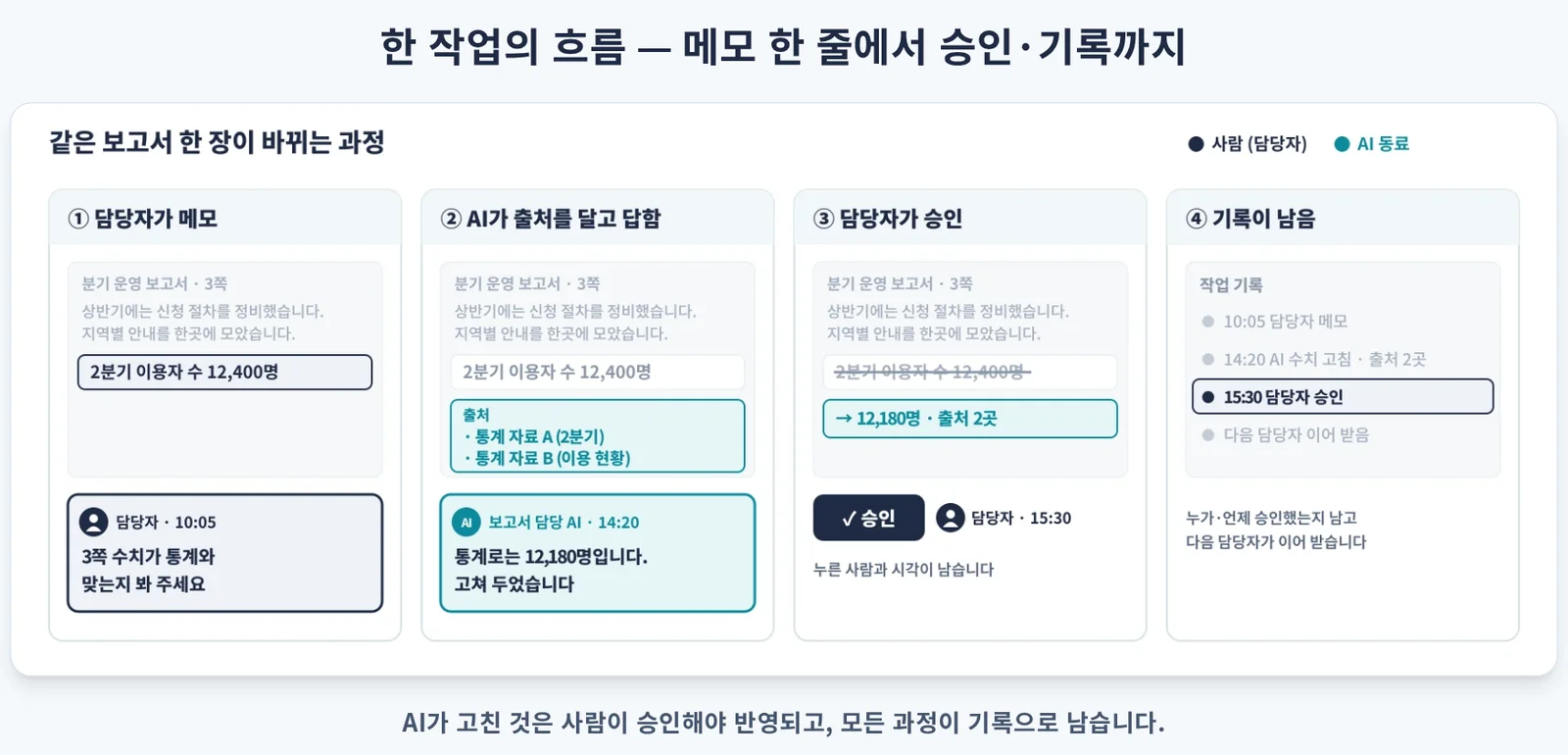 (Figure 9: From a one-line note to approval and a record. This four-panel illustration on the website shows how work currently flows through the company.)
5. The things I once held up as the answer
All of this is a big change that happened over two years. We have really come a long way, from suggestions for small pieces of code to working with AI as teammates. The things I used to hold up as the answer all seem to be disappearing. There was a time when a good prompt was the answer, and a time when a good harness was the answer. Now both have become parts of the work.
6. What I am doing about it
I am recording this process as it happens and turning it into products.
- "Harness Engineering," second edition: The first edition, published in July, captured what I ran into working with AI coding agents. Over the following three months, as I worked on company business with several AI models and colleagues, I expanded the harness I had used alone into a workplace for a team and a company (Naia ADK 2.0), and wrote that story in the second edition. Before publication, I gave the entire manuscript to three AIs and asked whether it was really worth buying, rather than asking for praise. For each criticism I reopened the code and commits, checked and made corrections. The second edition is coming soon. First edition: https://leanpub.com/naia-harness
- Naia AX: I am developing an AX offering to bring this way of working to institutions and companies: "From AX that runs a predefined flow to AX working with AI colleagues for each role." We first create a workspace (Naia ADK) containing an organization's materials and working standards, then introduce AI colleagues for each role. When the person responsible leaves a one-line note in a document, an AI colleague revises it with supporting evidence and replies. Once approved, it remains as a record for the next person to pick up. In effect, we bring the fourth stage above into an organization. We build it together in five stages—diagnosis → preparation → joint operation → evaluation → independent operation—and install it in the institution's or company's cloud account, so the system remains even if the AI company they use changes. Last month I also taught an advanced AX training course (planning) at Korea's National Tax Service, and we are preparing an offering for small business owners.
- Naia products and integration: I am also bringing the foundation we built to work with AI colleagues at the company into Naia for individuals. The structure becomes the same for company and personal use: assign work through a messenger, receive results in documents, and retain memory.
I have set out what Nextain does on our website.
- Nextain website: https://nextain.io/ko
- Naia AX introduction: https://nextain.io/ko#ax
- AX brochure: https://nextain.io/brochures/ax-20261030/index.html
- Naia brochure: https://nextain.io/brochures/naia-20261030/index.html
7. Where am I in all this?
Over two years, my place has moved from the editor to the chat window, from the chat window to the terminal, and from the terminal to the messenger. I am a developer who used to code by hand, but AI now writes most of the product code being added. Instead of opening the code line by line, I set the direction and check how it works. I believe there is value in that because we actually operate the products made this way, but I am still a little afraid about whether that is really true. I don't yet know where we will go next. Where am I in all this?
Am I really creating value? Was the time I spent struggling alone to build it worthwhile? Now I even leave that validation to AI and receive comfort and confidence from it. But because I know its limits, all I can do is keep questioning and looking back. And because we have only just released products and have yet to achieve commercial results, I am all the more afraid. Are those of you reading this enjoying these changes? Or am I the only one caught in this loop?
Having led a small organization that has not succeeded for quite a long time, I feel the weight of the words "Please approve." Responsibility for the output still rests entirely with people.
